

UnikEyes - FREE Eye Color App
GOOGLE PLAY and APP STORES
No two eyes are alike. Eye color is as unique as fingerprints. Even people with the same eye color have unique fiber structures, pigment distribution, and light-scattering properties.
- Eye science, eye uniqueness, and responsible eye health awareness.
- Discover & analyze eye color, iris patterns, and visible changes over time using science-based imaging and AI insights with FREE app.
Available on GOOGLE PLAY and APP STORES
ABOUT UnikEyes
Eye color is as unique as fingerprints
- We aim to provide the most fascinating, science-backed insights about eye color — decoded visually.
- Our app captures standardized eye images using guided lighting and focus, analyzes iris color, patterns, pupil size, and visible features using AI tools, and tracks changes over time and export reports for personal records or professionals.
- Discover your unique eye color.
- While UnikEyes does not diagnose medical conditions, tracking visible eye changes over time can help you notice patterns worth discussing with an eye care professional.
Examples (non-diagnostic): Sudden color changes; New dark spots; Persistent redness or yellowing; Pupil asymmetry. - 👉 You’ll learn surprising things about eye color you didn’t know — and see beautiful, high-quality examples. Some questions we'll tackle:
- Is eye color unique like a fingerprint?
- How is eye color determined?
- Is it normal to have freckles in the eye?
- Why do some people with the same eye color look completely different?
- Can any ethnicity or race have any eye color naturally?
- What are the advantages and disadvantages of each eye color?
- Does eye color predict personality?
- Can two brown-eyed parents have a blue-eyed child?
- Are all babies born with blue eyes?
- When do a baby's eyes change color?
- What gives eyes their color?
- Do blue eyes have blue pigments?
- What is the difference between amber, hazel, and light brown eyes?
- Is hazel a real eye color or just light brown?
- What is the most common eye color?
- What is the rarest eye color?
- Are red or violet eyes real?
- Can eye color change over time, or is that a myth?
- Can medication change eye color?
- What is heterochromia? Is it rare?
- Can diet change eye color (e.g., eating carrots)?
- Does eye color affect vision quality?
- Are certain eye colors associated with health risks?
- Can I change my eye color permanently?
- What is the most attractive eye color?
Disclaimer: Informational and educational only. Not a medical diagnosis. For eye health concerns, consult a licensed eye care professional. Further, UnikEyes app never collects personal data associated with using the app.
GET THE FREE APP TODAY →


DOWNLOAD APP ON GOOGLE PLAY
Eye color labels are broad. Iris patterns are not. Even people with the same eye color have unique fiber structures, pigment distribution, and light-scattering properties.
GET THE FREE APP TODAY →
DOWNLOAD APP ON APPLE STORES
Analyze eye color, iris patterns, and visible changes over time using science-based imaging and AI insights.
GET THE FREE APP TODAY →


WHY EYE COLOR IS UNIQUE
No Two Eyes Are Alike
- Eye color labels are broad. Iris patterns are not.
Even people with the same eye color have unique fiber structures, pigment distribution, and light-scattering properties. - Eye color is influenced by multiple genes.
- Apparent color changes are often optical, not genetic
- Iris patterns are stable but can reveal visible changes over time.
- Certain visible eye features can warrant professional attention: sudden color changes, new dark spots, persistent redness or yellowing, pupil asymmetry.
See how your eyes differ → FREE Eye Color App:


GREEN EYES VS HAZEL EYES: THE DIFFERENCE
GOOGLE PLAY and APP STORES
In short, green eyes scatter light. Hazel eyes layer color.
Green eyes are caused by low melanin + strong light scattering, while hazel eyes result from variable melanin distribution + pigment layering, often changing appearance with lighting.
This distinction is real, measurable, and consistent.
Melanin & Optical Physics
🟢 Green Eyes
Low to moderate melanin in the iris stroma
No actual green pigment exists in the eye
Color emerges from: Rayleigh/Tyndall light scattering, yellowish lipochrome + blue light reflection
Key trait: 👉 Uniform scattering across the iris
🟤 Hazel Eyes
Moderate melanin, but unevenly distributed
Often higher melanin around the pupil
Color comes from: Brown melanin overlay and scattering from lighter outer iris layers
Key trait: 👉 Layered pigment + spatial variation
Genetics (Polygenic Reality)
Neither green nor hazel eyes come from a single gene.
Key genes involved: OCA2, HERC2, TYR, SLC24A4, IRF4.
Differences:
- Green eyes typically express reduced melanin production
- Hazel eyes express region-specific melanin regulation
- This leads to mosaic expression in hazel eyes.
Stability Over Time
Green Eyes
- Generally stable from childhood onward
- Minor light-based variation only
Hazel Eyes
- Can shift noticeably with: age,
hormones, , lighting, clothing colors,
emotional arousal (pupil dilation affects perceived color).
Population Prevalence
Brown ~70–79%
Blue ~8–10%
Hazel ~5%
Green ~2%
Green eyes are rarer than hazel eyes.
Misclassification (Very Common)
Many people mislabel their eye color because:
- Hazel eyes appear green in bright light
- Cameras exaggerate green tones
- Social preference for “green” as a label
Cultural & Psychological Perception
Green eyes are often perceived as:
- Rare
- Striking
- Intense
Hazel eyes are perceived as:
- Adaptive
- Expressive
- Multifaceted
How our FREE eye color app can distinguish green eyes from hazel eyes:
- Objective Indicators for Classification
- Pixel-level hue variance across iris
- Central-to-peripheral melanin gradient
- Saturation consistency
- Presence of concentric color zones
Rule of thumb:If your eyes show multiple distinct tones, they are likely hazel—not green.
GET THE FREE APP TODAY →


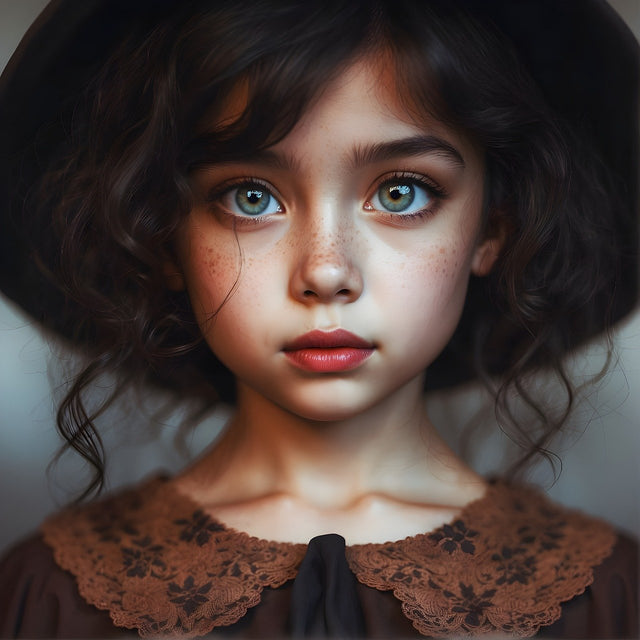

ALL ABOUT EYE FRECKLES
GOOGLE PLAY and APP STORES
What Are Eye Freckles?
Eye freckles are small, flat, pigmented spots on or around the eye caused by localized melanin accumulation. They are usually benign and often discovered incidentally.
They’re not all the same — “eye freckles” is an umbrella term.
The 4 Main Types of Eye Freckles (Clinically)
1. Iris Freckles
📍 Location: Surface of the iris
🟤 Appearance: Small brown or black dots, sharply defined
🧬 Cause: Clusters of melanocytes responding to genetics and UV exposure
Key facts
Common in light-colored eyes (blue, green, gray)
Do not affect vision
Do not distort iris structure
Flat (important distinction from nevi)
🧠 Fun fact: Iris freckles are more common in people with lighter skin tones, but can appear in anyone.
2. Iris Nevus (Eye Mole)
📍 Location: Within the iris tissue
🟤 Appearance: Larger, often slightly raised, with blurred edges
⚠️ Clinical note: Needs monitoring
How it differs from freckles
Feature Freckle Nevus
Thickness Flat Slightly raised
Risk Minimal Small melanoma risk
Monitoring Usually no Yes
Only ~1 in 8,000 iris nevi become melanoma, but tracking is essential.
3. Choroidal Nevus (“Freckle” Behind the Eye)
📍 Location: Back of the eye, beneath the retina
👁️ Visibility: Only detectable via eye exam
⚠️ Importance: Most serious type
Key stats
Present in ~5–10% of adults
~1 in 8,000 transform into melanoma annually
Requires periodic retinal imaging
🧠 Often called “the freckle you can’t see but shouldn’t ignore.”
4. Conjunctival Freckles
📍 Location: White of the eye (sclera)
🟤 Appearance: Brown spots, often near the iris
🌞 UV-related: Strongly linked to sun exposure
Traits
May darken with age or sun
Usually benign
Should be checked if they grow or change
Why Are Eye Freckles More Visible in Light Eyes?
Eye color is about melanin density, not pigment color.
Eye Color Melanin Freckle Visibility
Blue Very low Very high
Green Low High
Hazel Medium Moderate
Brown High Low
Gray Very low Very high
Light eyes = more light scattering = freckles stand out more.
Genetics vs Environment
Genetics 🧬
Strong heritable component
Linked to genes affecting melanin distribution (not total melanin)
Environment 🌞
UV exposure increases freckle formation
Similar to skin freckles, but slower developing
⚠️ Sunglasses with UV protection matter more than most people realize.
Are Eye Freckles Dangerous?
Usually: No
But monitor if:
A spot changes shape or color
It grows
You experience vision changes
It appears raised
Golden rule:
Flat = usually harmless
Raised or changing = check it
Eye freckles, also known as iris freckles or iris nevi, are small, pigmented spots that can appear on the iris of the eye. These freckles are similar to freckles that appear on the skin and are usually harmless. However, they should still be monitored by an eye care professional, as changes in size, shape, or color could indicate a more serious condition.
The color of eye freckles can vary depending on the amount and type of pigment present. They can range from light brown to dark brown or even black. In some cases, they may appear as a different color if they contain other pigments or if there is underlying inflammation or vascularization.
Eye freckles are typically caused by the clumping of melanocytes, which are cells that produce pigment, in the stroma layer of the iris. The exact cause of why these cells clump together is not fully understood, but it is believed to be influenced by factors such as genetics, exposure to ultraviolet (UV) light, and possibly hormonal changes.
It's important to note that while eye freckles are usually benign, any changes in size, shape, or color should be evaluated by an eye care professional to rule out more serious conditions such as iris melanoma. Regular eye exams can help monitor the health of the eyes and detect any abnormalities early.
GET THE FREE EYE COLOR APP →
GOOGLE PLAY and APP STORES


SHOP - EYE COLOR-INSPIRED DESIGNS
GOOGLE PLAY and APP STORES
SHOP UNIK
UnikEyes began and continues as a scientific exploration of eye color and iris uniqueness. The designs here are a creative extension of that work inspired by human variation and uniqueness to celebrate individuality, not categorization nor conformity. Find gifts for yourself or others, whether in your eye color or theirs.
- Blue
- Brown (Brown to Black)
- Gold Flecks (Freckles)
- Gray/Grey
- Green
- Hazel
- Heterochromia (multiple colors)
- Pink (Albinism)
- Red (Albinism)
- Violet
These are not medical tools, not health products, and not diagnostic in nature. Our focus remains education, research, and responsible eye awareness.
Don't forget to discover your unique eye color(s) and shade(s) with our FREE eye color app →


